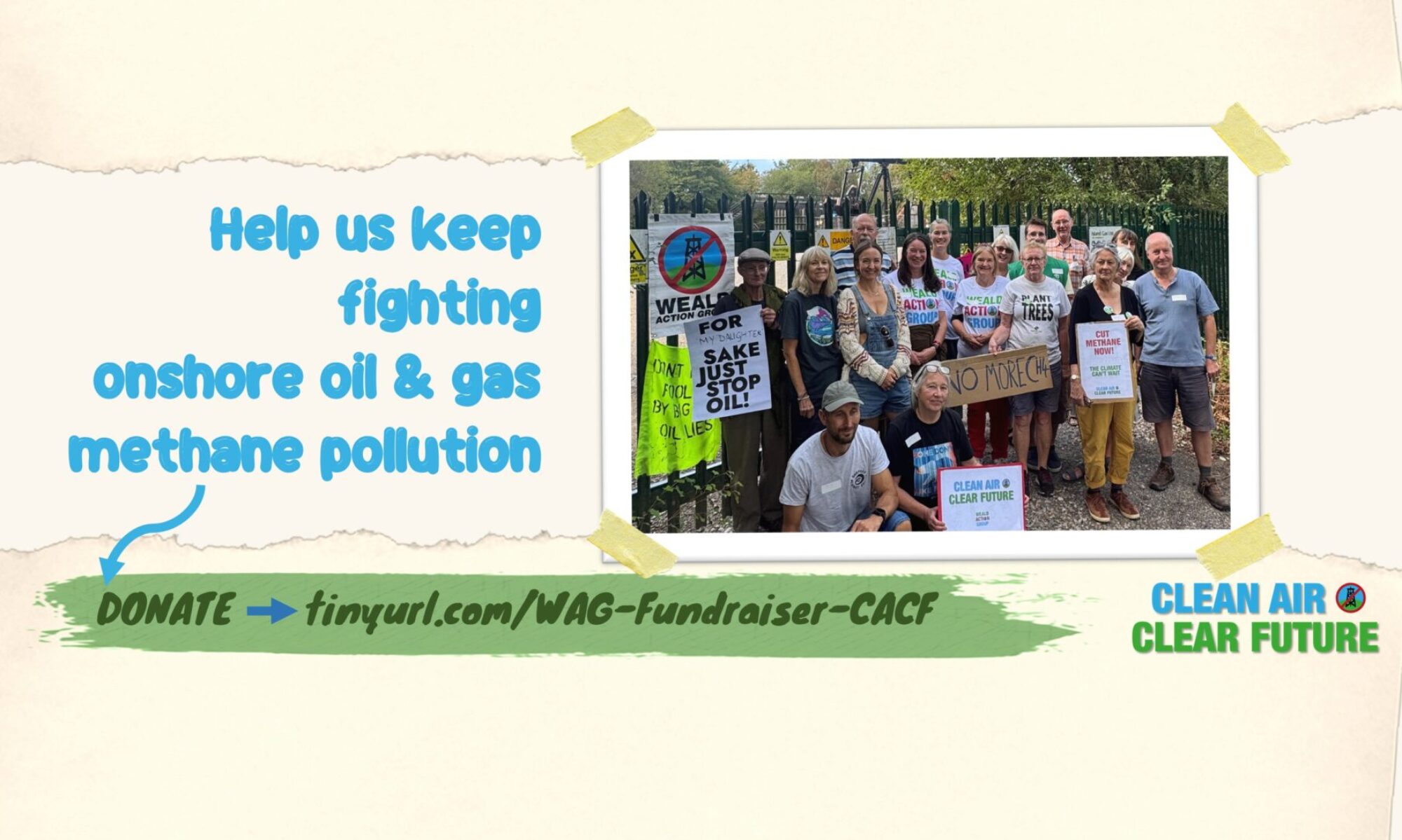
Our Fundraiser is Live! We’re taking action to cut methane gas pollution from onshore oil and gas
We’re a small grassroots campaign taking on government, regulators and the fossil fuel industry. This work takes time, expertise – and money. Every donation, however small, we need your help to keep up the fight.
Can’t donate? You can still make a real difference by sharing the fundraiser and helping us spread the campaign.
Find out how you can help here
Sign up to our mailing list for information on our Clean Air Clear Future campaign and our legal challenges:
Methane is a fast-acting but short-lived super pollutant and often overlooked as a driver of climate breakdown. It is more than 80 times more potent than carbon dioxide over a 20-year period and is responsible for around a third of global warming. Cutting methane pollution is one of the fastest and most cost-effective ways to slow climate breakdown this decade and reducing emissions of this gas has the added benefit of protecting public health by improving air quality. Yet in the UK, methane remains poorly regulated and largely hidden from public scrutiny.
One sector in particular has fallen through the cracks: onshore oil and gas. Methane pollution occurs across the entire lifecycle of this sector, from exploration and production, to site closure and abandonment. Filming at onshore oil and gas sites in England over the past seven years, using optical gas imaging cameras which make invisible gases visible, have repeatedly revealed methane pollution leaking and venting into the atmosphere from inadequately maintained and aged infrastructure. These dangerous emissions are far more widespread than most of us realise. For years, the industry has presented itself as tightly regulated and low impact but regulation carried out by the Environment Agency is currently heavily reliant on industry self-reporting – essentially asking companies to mark their own homework. Venting and flaring of gas are still common, inspections infrequent, and leak detection is sporadic.
The technology to address methane emissions already exists. But without proper monitoring, reporting and verification, emissions remain hidden and regulators are turning a blind eye to the need to address this pollution. Gas is also deliberately wasted when it is burned in a flare or released to the environment through venting. This is gas which should be captured and used to heat homes or generate electricity.
In addition, methane pollution from onshore oil and gas is currently not included in the UK Government’s 2025 Methane Action Plan, undermining the credibility of the UK’s wider methane reduction commitments, particularly as it continues to present itself as a climate leader.
Through legal challenges, Freedom of Information investigations and emerging field data, Weald Action Group are exposing these dangerous regulatory gaps, loopholes and systemic failures that have allowed this super pollutant from this sector to go unchecked.
What needs to change is clear – stronger regulation and enforcement by ending routine flaring and venting by 2030; robust leak detection and rapid repair across the sector; proper monitoring, reporting and verification of emissions; and the inclusion of onshore oil and gas in national methane reduction policies.
Addressing onshore oil and gas methane emissions now would deliver rapid climate benefits, strengthen public health protections, and rectify a contradiction between the UK’s international climate rhetoric and domestic regulation. Alongside our legal challenges, the Weald Action Group will push for action that has been delayed for far too long.
Legal Challenges
The Weald Action Group is currently pursuing two separate judicial review challenges:
- The first challenges the Secretary of State’s UK Methane Action Plan, arguing that it fails to properly address the risks to delivering the UK’s carbon budgets under the Climate Change Act and omits meaningful policies for onshore oil and gas methane emissions. We also argue that the Methane Action Plan is government policy, and as such it must comply with environmental principles designed to prevent harm and protect the environment. A hearing is scheduled for 18 November 2026.
- The second challenge concerns the Environment Agency’s operational permit variation for the onshore Horndean oil sites in Hampshire. We argue that the permit unlawfully allows methane emissions from the sites without adequate limits, fails to properly assess better methane mitigation options, and was approved without sufficient transparency or public consultation. (A judge refused this one but we have appealed and as at August 2026, are waiting to see if we get permission to take it forward.)
We believe these are important cases that could have implications far beyond the sites involved. Ultimately we want to shut down all oil and gas development, but in the meantime we need to ensure robust methane regulation and climate policy across the UK.