
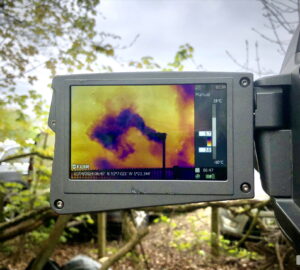
The Weald Action Group is starting the new year by launching legal action over the UK’s failure to properly regulate methane emissions from onshore oil and gas sites.
The Group’s lawyers, Leigh Day, have issued a formal pre-action legal challenge to the Secretary of State for Energy Security and Net Zero (DESNZ) and the Environment Agency citing failures in the UK’s recent Methane Action Plan, and long-running weak regulation at active oil sites such as Horndean in West Sussex.
Campaigners say current government policy is not fit for purpose and allows routine methane venting and flaring to continue onshore, without enforceable limits or requirements to use Best Available Technology (BAT) to capture gas and prevent pollution.
“Reducing methane emissions is crucial for slowing climate breakdown, yet it’s still not being treated with the urgency needed,” said Emily Mott, Weald Action Group. “Regulators must not only ban routine venting and flaring for onshore sites to align with offshore but also require robust monitoring, measurement and reporting, and mandate frequent and rapid leak detection.”
Following WAG’s landmark Supreme Court victory in 2024 with the Finch Judgment, which confirmed that climate impacts must be fully considered when approving fossil fuel developments, this legal action challenges the government’s failure to set binding methane limits and the Environment Agency’s approval of permits that allow ongoing venting and flaring.
Methane is one of the most potent greenhouse gases with a global heating impact around 80 times greater than carbon dioxide over a 20-year period, and the government must urgently treat methane reduction as a frontline climate priority in 2026.
Campaigners near the Horndean oil site, referenced in the Pre-Action Protocol letter, stress that the case goes far beyond one single oil facility. They argue it raises fundamental questions about whether the UK can meet its climate commitments while continuing to allow avoidable methane pollution from fossil fuel extraction.
“The UK has shown international leadership on methane by becoming Co-Chair of the Climate and Clean Air Coalition and a Global Methane Pledge Champion, committing to help drive a 30% global reduction in methane emissions by 2030,” says local Ann Stewart of Weald Action Group, “but you can’t claim climate leadership internationally whilst allowing avoidable emissions to continue at home”.
Read more about methane: wealdactiongroup.org.uk/methane/