
Happy New Year!
2025 was quite a year for the Weald Action Group. We saw continuing impacts of our 2024 Supreme Court win, and renewed debate on the topic of fracking. We also laid the foundations of a new campaign on methane.
The year saw some positive developments – including a landmark opinion on climate change from the International Court of Justice (see below) and a commitment by the UK government to end new oil and gas licensing, both on and offshore. However it also saw the intensification of climate impacts around the world, from fires and floods to the failure of farming systems. In October, scientists warned that the Earth had reached the first catastrophic climate tipping point, with coral reefs facing ‘widespread dieback’, and is ‘on the brink’ of reaching other tipping points, including the dieback of the Amazon, the collapse of major ocean currents and the loss of ice sheets. This underlines the extreme urgency of stopping producing and burning fossil fuels – the root cause of human-made global warming.
Here we look back at some highlights from our campaigning year – and send thanks to everyone who has been part of it.
January: Earthquakes may be linked to drilling say experts
January saw the publication of a study by researchers at UCL which suggested that oil production at Horse Hill may well have triggered a series of over 100 small earthquakes in Surrey during 2018 and 2019, nicknamed the ‘Surrey Swarm’. The official enquiry into the cause, hosted by the Oil & Gas Authority, had disregarded the existence of the Horse Hill oil site and therefore ruled it out as a cause. The new study used computer modelling to test the effects of oil extraction from the Portland and Kimmeridge units as well as of surface works – and came to the opposite conclusion.
January: Rosebank and Jackdaw oil and gas fields ruled unlawful

On 30 January, we celebrated a huge win for the climate as the Rosebank and Jackdaw oil and gas fields in the North Sea were ruled unlawful. The two sites had been given consent by the Sunak government, now the Scottish Court of Session ruled that consent was unlawful as there had been no assessment of the impact of the greenhouse gas emissions that would arise when the oil and gas to be extracted was eventually burned (known as ‘scope 3’ or ‘downstream’ emissions). This was a direct consequence of our 2024 Supreme Court win.
April and June: Our victory applied to industrial animal farming
Our landmark win has also had impacts beyond the oil and gas sector. In April, an intensive livestock facility in Norfolk was refused planning permission to expand on environment and climate grounds. The Planners referenced our Supreme Court ruling, saying councillors couldn’t make a lawful decision without understanding the likely climate impacts.
Then in June, a High Court judge overturned planning permission for an intensive poultry unit in the River Severn catchment following a legal challenge brought by a local campaigner, supported by River Action. The case focused on Shropshire Council’s failure to assess the full environmental impact of the development, including the spreading of poultry manure or digestate on surrounding land. The judge relied on the definition of causation from our judgment to rule that the environmental impact assessment should have covered these impacts.
June: New guidance on scope 3 emissions published
On 19 June, campaigners were delighted by the publication of new government guidance for offshore oil and gas developers which require them to reveal the amount of CO2 that will be released from burning the oil and gas they plan to extract.
This was a direct result of our win – and a significant step forward. The government took on board suggestions made by the Weald Action Group and others. However it only applies to offshore developments. The planning framework for onshore oil and gas is entirely out of step with the government’s intention to transition away from fossil fuels, and we continue to campaign for it to be brought in line.
July: UKOG abandons exploration plans for Dunsfold and Broadford Bridge
UKOG surrendered the exploration licence (PEDL234) covering the Dunsfold (Surrey) gas and mothballed Broadford Bridge (West Sussex) oil sites, both of which had been the subject of strong local campaigns and community-led resistance. We continue to press West Sussex County Council to ensure that UKOG fully meets its restoration obligations at Broadford Bridge.
July: Landmark advice on states’ duty to prevent climate harm
On 23 July, the International Court of Justice published a historic Advisory Opinion on the Obligations of States in respect of Climate Change. The Court described climate change as an “existential problem of planetary proportions that imperils all forms of life and the very health of our planet” and confirmed that States have a duty to prevent activities that cause significant harm to the environment. It said that fossil fuel production, consumption, exploration licences and subsidies may constitute – may constitute an “internationally wrongful act”. We commissioned legal advice on the implications of this opinion for the UK oil and gas industry.
July: Weald Action Group’s Sarah Finch named Campaigner of the Year
Sarah Finch, who brought the landmark court case on behalf of the Weald Action Group, was named Campaigner of the Year by the Sheila McKechnie Foundation.
October: European Court of Human Rights rules on the climate impacts of new fossil fuels
In October, the European Court of Human Rights ruled that States must fully assess the climate impact of new fossil fuel projects and their compatibility with climate duties. The case, Greenpeace Nordic and Others v. Norway, concerned the legality of the Norwegian government’s decision to issue new licences to explore for – but not yet to extract – fossil fuels in the Arctic Ocean. The Court found that the licensing decision itself did not violate the European Convention on Human Rights – because Norway must comprehensively assess the climate impacts of new fossil fuel extraction at a later stage, before final project approval is granted. The ruling drew on the UK Supreme Court’s judgment on our case.
December: Oil companies abandon quest to produce oil at Biscathorpe
In December, two oil companies gave up their ten-plus-year quest to produce oil at Biscathorpe in the Lincolnshire Wolds. Lincolnshire County Council refused planning permission for the development in 2021, but this was overturned by the planning inspectorate in 2023. However, following our Supreme Court win, the High Court ruled that the planning inspectorate must redetermine the appeal. The appeal was due to be heard in April 2026, but the oil companies withdrew just ten days after SOS Biscathorpe, the Weald Action Group (and no doubt others) submitted our objections.
December: Waddock Cross decision delayed
The decision on whether to allow an extension at the mothballed oil state at Waddock Cross in Dorset has twice been delayed thanks to our interventions.
The application was heard by the Dorset Council Committee in September, but following speeches by Weald Action Group representatives and questions from a Green Councillor, the Committee voted to defer the decision because they wanted more information on the climate impact. We then wrote to the Secretary of State asking him to review Dorset Council’s decision that the development did not require Environmental Impact Assessment. The Secretary of State agreed to do so by 1 March 2026, so the application will be delayed until after that.
December: First steps towards a legal challenge on methane
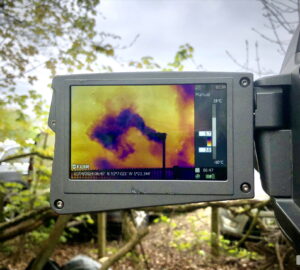
With our legal team, we took the first step towards a potential legal challenge of the Environment Agency’s failure to properly regulate methane emissions at the Horndean site in West Sussex, and of the failure of the government’s Methane Action Plan to set more robust methane control measures for the onshore oil and gas sector.
2026: what’s next?
We’re proud of what we’ve achieved this year, as a small group of volunteer campaigners. And we’ve got big plans for 2026.
Scope 3 emissions
We look forward to continued impacts from our Supreme Court win as the requirement to assess scope 3 emissions makes it ever harder to justify oil and gas production and other carbon-intensive activities. In particular we are looking forward to the government’s decisions on the renewed applications for Rosebank and Jackdaw: we submitted objections to both.
Methane
Our research shows that environmental permits for at least 20 onshore oil and gas developments are failing to manage methane emissions, suggesting systemic regulatory failure of the onshore sector. We are considering both a site-specific and a sector-wide legal challenge.
Improving the definition of fracking
The government has promised to ban fracking – however their definition excludes ‘low volume’ and other types of fracking. We are collaborating with leading geologists and fellow campaigners across the country to make sure that the ban explicitly covers all forms of fracking.
Changes to national planning policy
The government is consulting on a revised National Planning Policy Framework (NPPF) and other changes to the planning system. The consultation draft sets out “a more restrictive approach to the extraction of coal, oil and gas” and stipulates that the “great weight to the benefits of mineral extraction… does not apply to development involving peat, coal, or onshore oil and gas extraction.” This is a very positive move – and something we have been calling for for a long time. We will be submitting our views to the consultation.